Rubber sink mats help protect countertops and keep drains clear, but they can trap grime, mold, and odors if not cleaned regularly. This practical guide shows a simple, effective method using common household tools and the right cleaning products to keep mats fresh.
Whether you’re tackling weekly maintenance or deep cleaning, the goal is to remove soap scum, mineral buildup, and bacteria without damaging rubber surfaces. The steps below are suitable for most standard kitchen sinks and are easy to adapt to various mat sizes.
Quick Answer
Fast method: Rinse mat, sprinkle with baking soda paste, scrub with a stiff nylon brush, rinse, then dry completely. For tough buildup, use a silicone cleaning pad or a long-handle dish brush to reach crevices, followed by a microfiber cloth for drying and buffing.
What You’ll Need
- Stiff nylon bristle scrub brush for rubber sink mats
- Long-handle dish brush for cleaning rubber sink mats
- Silicone cleaning scrub pad for rubber sink mats
- Microfiber cleaning cloth for rubber sink mats
- Baking soda paste cleaner for rubber sink mats


Before You Start
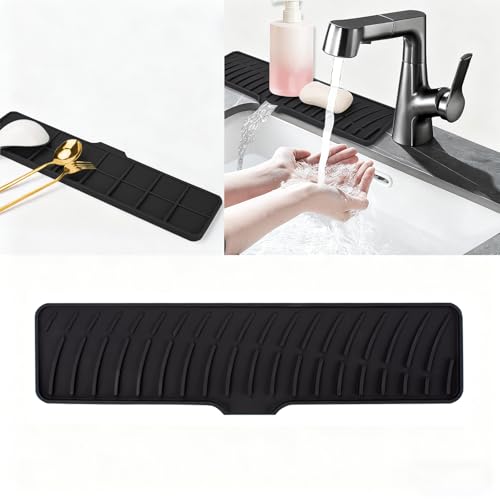
Clear the sink area and remove any mats before cleaning. Protect nearby surfaces with a towel if you’re dealing with a deep clean. For safety, wear gloves to minimize skin contact with cleaners. Time estimate: 10–20 minutes for routine cleaning; 30–45 minutes for a heavy scrub and stain removal.
Cautions: Avoid abrasive cleaners that can crack or wear down rubber over time. Do not soak mats in hot water for extended periods if the mat has reinforced rubber edges that could warp. Ensure the mat is fully dry before returning to the sink to prevent mildew.
Step-By-Step: How To Clean Rubber Sink Mats
- Remove the mat from the sink and rinse under warm running water to loosen surface debris.
- Prepare a cleaning zone with a damp cloth or towel to catch drips and a bowl of clean water for rinsing brushes.
- Sprinkle a light coating of baking soda directly onto the mat to act as a gentle abrasive and deodorizer.
- Use the stiff nylon bristle scrub brush to scrub the mat, focusing on any grooves or textured surfaces where grime accumulates.
- For difficult buildup, switch to the long-handle dish brush to reach the mat’s underside and edges without kneeling or bending awkwardly.
- Rinse the mat thoroughly to remove all baking soda and loosened debris. If residue remains, repeat the brushing and rinsing step.
- Apply a silicone cleaning scrub pad for a final pass; this helps lift stains without scratching the rubber surface.
- Dry the mat completely with a microfiber cleaning cloth, or air-dry in a well-ventilated area before placing it back.
- Inspect the mat for any lingering odors; if needed, repeat the cleaning cycle or treat with a dilute vinegar rinse (1:1 water and white vinegar) and air-dry.
- Reinstall the mat, ensuring it lies flat and covers the entire sink surface to prevent slipping and water splashes.
- Schedule routine maintenance every 1–2 weeks to prevent buildup; deeper cleaning can be done monthly or as needed.
Troubleshooting
| Symptom | Likely Cause | Fix | Prevention |
|---|---|---|---|
| Persistent odor after cleaning | trapped debris in texturing | repeat cleaning with baking soda paste and a scrub brush | clean regularly to prevent buildup |
| Streaks or dull appearance | residue or mineral deposits | rinse thoroughly; use microfiber cloth for final buffing | rinse after each use; dry mat |
| Mat feels stiff or warped | excessive heat exposure or over-washing | air-dry in a cool area; avoid hot water or harsh solvents | store away from direct heat |
| Grooves still trapping grime | inadequate scrubbing | employ long-handle brush and silicone scrub pad | pre-clean with brushing regularly |
Common Mistakes
- Using abrasive household cleaners that can crack rubber over time
- Not rinsing off baking soda completely, leaving a residue
- Allowing mats to air-dry in damp conditions, which promotes mildew
- Overlooking the underside of mats where mold can hide
Tips For Best Results
- Combine baking soda with a splash of white vinegar for stubborn stains, then scrub and rinse thoroughly.
- Use a microfiber cloth for drying; it absorbs moisture quickly and reduces streaks.
- Regular maintenance—even brief weekly cleanings—prevents heavy buildup and extends mat life.
- Alternate cleaning tools (nylon brush, long-handle brush, silicone scrub pad) to reach all nooks and crannies.
- Label mats if you have multiple sizes to ensure consistent cleaning practices.
Call A Professional
If rubber mats show signs of persistent cracking, tearing, or lingering odors despite thorough cleaning, consider consulting a professional for spot refinishing advice or replacement options. Seek help if mats have visible mold growth that does not improve with cleaning or if there are signs of extensive surface degradation.
FAQ
Can I use bleach to clean rubber sink mats?
Bleach can damage rubber over time and may cause discoloration. It’s best to avoid harsh bleaches and stick to mild cleaners and baking soda.
How often should I clean rubber sink mats?
For most households, a routine cleaning every 1–2 weeks is sufficient, with deeper cleanings monthly or as needed.
What’s the best way to dry mats after cleaning?
Air-drying in a well-ventilated area or drying with a microfiber cloth ensures mats dry thoroughly and reduces mildew risk.
Are rubber sink mats dishwasher safe?
Most mats are not designed for dishwashers; hand washing with the recommended tools yields best results and helps preserve elasticity.
Buying Guide
When choosing rubber sink mats, consider size, material flexibility, and edge design. Larger mats offer better coverage but require more thorough cleaning. Noise level is not a major factor, but consider mats with textured surfaces that minimize slips. Energy efficiency is not a factor for mats, but choosing easy-to-clean materials saves time. Look for non-slip backing, dishwasher-safe compatibility, and ease of air-drying. Placement within the sink area should cover the drain area effectively while fitting the sink’s contours. Compare mats by texture, cleaning ease, and compatibility with standard cleaning tools like nylon brushes, silicone scrub pads, and microfiber cloths.