Answering the question, these shoe storage solutions with shelves help you maximize space, reduce clutter, and keep footwear easily accessible. They’re best suited for entryways, hallways, mudrooms, and closets where you want to blend storage with style. Choose a design based on space, capacity, and whether you prefer doors, flip drawers, or open shelving. The following picks balance capacity and compact design to fit common American homes.
Summary of selected products
| Product | Space Type | Approx. Capacity | Key Benefit |
|---|---|---|---|
| Homleke Farmhouse Shoe Cabinet (5-Tier) | Tall cabinet with adjustable shelves | 15+ pairs | Rustic farmhouse look with solid stability |
| VASAGLE Shoe Storage Cabinet (10 Tier) | Tall, multi-tier with top storage | Up to 30 pairs | High capacity with flexible shelving |
| ONBRILL 6-Tier Shoe Storage Cabinet | Doors and enclosed shelves | 18–24 pairs | Concealed storage for a tidy look |
| Homleke 32″ W Farmhouse Shoe Storage | Slim, narrow cabinet with two flip drawers | 11–20+ pairs (estimate by shoe type) | Slim footprint with accessible flip drawers |
| GRUSIGN Shoe Cabinet with 2 Flip Drawers | Narrow cabinet with 2 flip doors | 16+ pairs | Great for tight spaces with adjustable internal dividers |
Homleke Farmhouse 5-Tier Shoe Cabinet
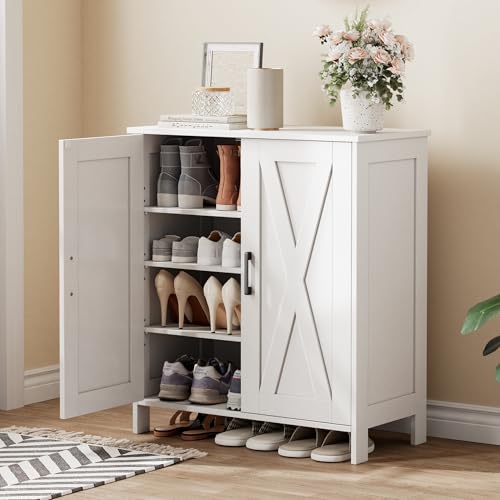
Best for: Households needing substantial storage in a single footprint. The 5 adjustable shelves enable organizers to adapt to flats, sneakers, and boots. The large 13.8” depth and 27.6” width fit in entryways or closets without overwhelming space.
Why selected: Combines rustic farmhouse charm with practical organization. The two barn doors and wood legs deliver a sturdy, stylish focal point. A wall-anchoring anti-tip device adds safety in homes with kids or pets.
Caution: Made from particleboard; avoid exposing to excess moisture to preserve finish and stability.
VASAGLE 10-Tier Shoe Storage Cabinet

Best for: Users needing maximum shoe capacity in a single unit. This tall cabinet holds up to 30 pairs and includes a top compartment for boxes or baskets, making it ideal for busy households with varied footwear.
Why selected: Space-saving footprint combined with a stylish look. The interior compartments can be adjusted by removing shelves to accommodate taller items like boots.
Caution: Tall height may require secure wall anchoring in homes with active children or high-traffic hallways.
ONBRILL 6-Tier Shoe Cabinet

Best for: Entryways or front doors where you want a balanced blend of closed storage and visibility. This model stores 18–24 pairs with 3 adjustable shelves for height flexibility.
Why selected: Doors help hide clutter and maintain a clean look. The criss-cross design adds visual interest, while the white hue coordinates with many decors.
Caution: The cabinet’s depth may slightly limit placement in ultra-narrow corridors; measure carefully before purchasing.
Homleke 32-Inch Farmhouse Shoe Cabinet

Best for: Narrow spaces where width matters but you still want hidden storage. Two flip drawers provide organized access while maintaining a slim profile.
Why selected: Combines a rustic barn-door aesthetic with modern functionality. Height and narrow depth make it a versatile fit for entryways, hallways, or living rooms with tight corridors.
Caution: The design relies on flip drawers; ensure smooth operation in high-use areas by cleaning tracks periodically.
GRUSIGN Shoe Cabinet With Flip Drawers

Best for: Narrow entryways where width is critical but you still need organized storage for multiple shoe types, including high heels or boots.
Why selected: Four-tier capacity with two flip doors provides quick access while shielding shoes from dust. The top fence offers a handy spot for small items like keys or leashes, enhancing daily convenience.
Caution: Some users may prefer more standalone shelves for bulk boots; consider how you arrange tall footwear before purchase.
Buying Guide: Practical Considerations for Shoe Storage With Shelves
Size and footprint: Measure entryways, hallways, and closets to select a unit that fits without blocking traffic. Narrow models work best in tight spaces, while taller cabinets maximize storage in a smaller floor area.
Storage format: Choose open shelves for quick access, doors for hidden tidiness, or flip drawers for compact, organized compartments. Consider whether you want adjustable shelves to accommodate boots and boxes.
Material and construction: Particleboard or engineered wood is common and affordable, but look for sturdy bases and anti-tip devices if kids or pets are present. Finish should resist scuffs and moisture exposure in entryways.
Ventilation and cleanliness: Half-wrap designs or open sections help air circulate, reducing odor buildup. Removable shelves simplify cleaning and reorganization.
Style compatibility: Farmhouse and modern neutrals pair with most decors. If aesthetics are important, match color and hardware (knobs, handles) to your furniture and door hardware for a cohesive look.
Safety: Ascertain if wall anchoring is recommended. Taller units can become top-heavy if not secured, especially in active households or multi-story homes.
FAQ
What is the best shoe cabinet for boots?
A taller cabinet with adjustable shelves and wide compartments accommodates boots more easily. Look for models offering 11.8″ or wider interior depths or adjustable panels.
Do tall shoe cabinets require wall anchoring?
Yes, especially in homes with kids or pets. Anti-tip devices or wall anchors improve stability and safety.
Is doors vs. flip drawers better for dust control?
Doors generally hide dust better, but flip drawers provide quick access. Choose based on whether you prioritize dust protection or retrieval speed.
Can these units fit in a small apartment hallway?
Yes, select narrow or 9–13 inch depth models. Consider multi-tier layouts that maximize vertical space without extending far into the hallway.
Are these units easy to assemble?
Most are designed for straightforward assembly with standard tools. Check the product pages for included hardware and step-by-step instructions.
How should I arrange shoes for best visibility?
Group by type (daily sneakers, work shoes, boots) and place frequently worn pairs at eye level or in top compartments for easy access.