Answering the common buyer question: focus on right-handed door handles when your doors open away from you and swing to the right. This guide presents solid, non-locking and locking lever options for homes, offices, and storefronts. It highlights which handles are best for interior doors, exterior doors, closets, and hallways. Each product section explains who it’s best for, plus key strengths and limitations to help you compare at a glance.
Product Comparison Snapshot
| Product | Best For | Notes |
|---|---|---|
| HENYIN 805SN-R | Right-handed exterior or interior doors needing a keyed entry | Includes 3 keys; reversible backset (2-3/8″ or 2-3/4″) |
| MANREN MR802ET | Exterior or interior doors needing universal handedness | Left or right hand universal; 3 keys; reversible backset |
| Berlin Modisch Passage Lever | Hallways or closets with non-locking function | Reversible for left/right doors; satin nickel finish |
| Pacific Doorware Adams Rite Style | Storefront or commercial doors with deadlatch | Right-handed; aluminum finish |
| Amazon Basics Easy Installation Straight Door Lever | General interior doors needing simple, reversible lever | Easy installation; fits standard door thickness |
HENYIN Wave Lever Keyed Entry Door Lock

Best for right-handed exterior or interior doors requiring keyed security. The 805SN-R model ships with three keys and offers a reversible backset between 2-3/8″ and 2-3/4″. The design suits traditional or transitional homes that need a sturdy lockset for main entry points. A limitation is that this unit is right-hand specific, so confirm door orientation before ordering.
MANREN Universal Lever Keyed Entry

Better for doors that require a universal left/right option. The MR802ET includes three keys and a reversible backset (2-3/8″ or 2-3/4″). Suitable for exterior and interior doors where future handedness changes are possible. Choose this if door orientation might vary during installation or if you want flexibility without swapping hardware later. The trade-off is potential extra hardware cost versus a fully universal fit.
Berlin Modisch Passage Lever

Best for hallways or closet doors needing non-locking operation. The satin nickel finish complements modern interiors, and the reversible handle supports both left and right-handed doors. It’s ideal where a simple, non-locking actuator is sufficient. A limitation is that it is a passage lever, so it does not provide security through a lock—useful for interior spaces only.
Pacific Doorware Adams Rite Style Deadlatch
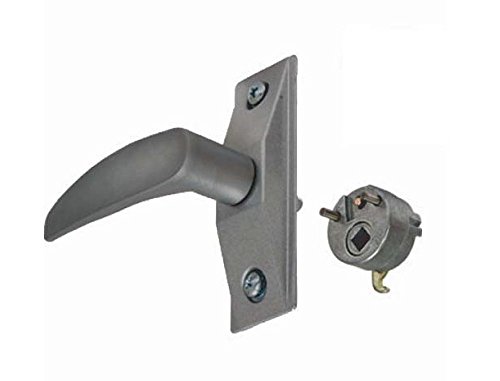
Best for storefront or commercial doors needing a durable lever with deadlatch compatibility. The Adams Rite style lever is designed to fit most storefront deadlatch locks and comes in an aluminum finish. Choose this if you’re updating a commercial entrance or a high-traffic area. Limitation: installation may depend on compatibility with existing deadlatch hardware.
Amazon Basics Easy Installation Door Lever

Best for quick projects and DIY installs on interior doors. The lever is fully reversible and designed for doors 1-3/8″ to 1-3/4″ thick, with straightforward Phillips-head installation. It’s suitable for general interior use where easing installation speed matters. A potential limitation is that it may not be ideal for exterior security needs or high-security applications.
Design House Scroll Passage Lever

Note: This is included as a reference for additional style context; it’s a non-locking, reversible lever with a classic polished brass finish. Best for interior doors where decorative hardware matters, such as bedroom or closet doors. It should not be used where locking functionality is required.
Buying Guide: Key Considerations
- Handedness and orientation: Confirm door swing and whether a handle is truly right-handed or reversible.
- Locking vs. non-locking: Choose keyed entry or passage levers based on whether you need security or simple operation.
- Backset and door thickness: Ensure compatibility with your door’s backset (2-3/8″ or 2-3/4″) and thickness (commonly 1-3/4″ for interior doors).
- Finish and style: Match finishes (satin nickel, polished brass, aluminum) to room aesthetics and existing hardware.
- Durability and materials: Look for solid zinc alloy or premium metals for long-term use in high-traffic areas.
- Installation ease: Consider models labeled for easy installation if you’re doing a DIY update.
- Compatibility with existing hardware: Check whether a product supports deadlatch compatibility or includes a strike plate that fits your frame.
FAQ
- What does “right-handed” mean for a door lever?
– It refers to doors that swing away from you and open to the right; the lever is mounted on the right side when facing the door from the exterior or entry side. - Should I choose a keyed entry lever for interior doors?
– Keyed entry is typically used for exterior doors or rooms needing added security; interior doors generally use passage levers that don’t lock. - Are reversible backsets important?
– Yes. A reversible backset (2-3/8″ or 2-3/4″) provides flexibility if you change door orientation after installation. - What’s the difference between a dummy lever and a functioning lever?
– A dummy lever is non-turning and decorative or used for secondary doors; a functioning lever operates a latch and may include a lock. - Can I mix styles across rooms?
– Yes, but ensure handedness, finish, and backset compatibility align with each door’s needs for a cohesive look. - Do these lever sets require special tools?
– Most designs use standard screwdrivers and align with common door preparations; some may need basic drilling or latch adjustment.