Plastic cubby storage bins offer practical, lightweight organization for toys, crafts, books and everyday essentials. This guide helps buyers choose the right set for classrooms, homes or workspaces. Each top pick is suited to a specific use case, from busy classrooms needing color-coding to compact home offices requiring stackable, easy-to-clean bins. The table below provides a snapshot of the five featured products to compare at a glance.
| Product | Best For | Size (approx.) | Colors/Variety |
|---|---|---|---|
| Hoolerry 24 Pcs Plastic Cubby Storage Bins | Classrooms and group activities | 11.5 x 7.5 x 5 in | 6 colors, labels |
| Storex Small Cubby Bins – 5-Pack | Teacher desks and small items | 12.2 x 7.8 x 5.1 in | Blue, durable |
| WUWEOT 16 Pack Cubby Bins | Color-coded, multi-room storage | 11.4 x 7.5 x 5 in | 8 colors |
| Dcocdeely 18 Pcs Plastic Classroom Bins | Bright classroom sets | Approx. 11.5 x 7.6 x 4.9 in | 6 colors |
| Dandat 24 Pcs Plastic Cubby Storage Bins | Bulk classroom or home library | 11.42 x 7.87 x 5.12 in | 12 colors |
Hoolerry 24 Pcs Plastic Cubby Storage Bins

Best For: Classrooms, libraries, or group projects that require clear organization and easy labeling. The 24 bins come in six colors with self-adhesive labels, great for color-coding and quick item identification.
Why selected: Durable plastic construction with odor-resistant, water-resistant properties makes these bins reliable for daily classroom use. The moderate 11.5 x 7.5 x 5 inch size fits most cubbies and shelves while offering ample storage for toys, art supplies and books.
Limitations: While versatile, a non-labeled version may require manual labeling for consistency in large groups.
Storex Small Cubby Bins – 5-Pack

Best For: Classrooms or desks needing compact, nestable storage for art supplies, small books or craft items. Designed to fit into standard classroom furniture.
Why selected: The bins nest together for compact storage when not in use, reducing clutter in crowded spaces. Durable plastic offers a practical interface for kids and teachers alike.
Limitations: The color options are limited to the standard blue family in this multi-pack, which may affect color-coding schemes that rely on broader palettes.
WUWEOT 16 Pack Cubby Bins
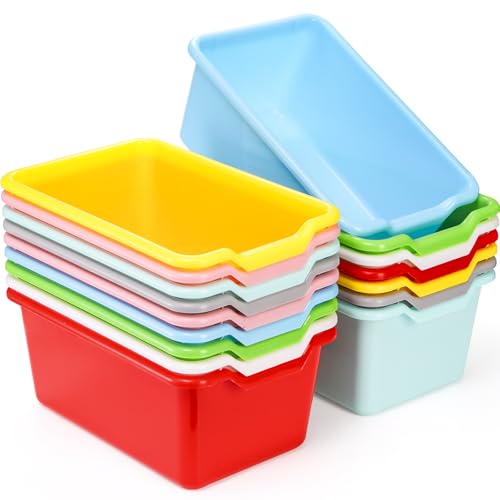
Best For: Color-coded classrooms or playrooms where multiple color sets help with organization and stations. The 8 colors support easy labeling and visual sorting.
Why selected: These bins feature easy-to-grasp scoop handles to reduce strain during daily classroom cleanup and transfer. They pair well with most 12-inch cubbies and suit standalone storage too.
Limitations: Some users may prefer a uniform color across sets to maintain a strict color scheme; color variations may differ across batches.
Dcocdeely 18 Pcs Plastic Classroom Bins

Best For: Colorful classroom sets that need a cohesive look while providing organized storage for books, toys and art supplies.
Why selected: Each set includes six colors, resulting in a visually engaging and motivating environment for kids to sort and tidy items. The size is well-suited for shelves and cubbies in busy spaces.
Limitations: The exact material composition is not described beyond “plastic”; users should verify suitability for high-traffic environments if needed.
Dandat 24 Pcs Plastic Cubby Storage Bins
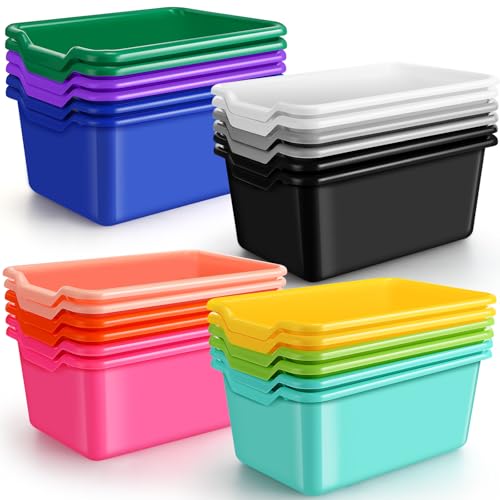
Best For: Bulk classroom libraries or home libraries where a large, colorful set helps maintain order and accessibility for children and adults alike.
Why selected: The large 11.42 x 7.87 x 5.12 inch bins accommodate a wide range of toys and books. Availability of 12 colors supports varied organization schemes and classroom-wide color coding.
Limitations: The broader color selection may require consistent labeling practices to avoid color mix-ups in large groups.
Buying Guide: How To Choose The Right Plastic Cubby Bins
- Size and compatibility: Measure your cubbies, desks, and shelves. Choose bins that fit with minimal wasted space and allow easy access for kids.
- Durability: Look for sturdy, crack-resistant plastic that withstands daily handling and cleaning. BPA-free options are common and preferable for classrooms and homes.
- Color coding and labeling: If color coding is important, select sets with a wide color range or self-adhesive labels for quick sorting and identification.
- Stackability and nesting: Consider whether you need bins that stack to save space or nest when not in use for compact storage.
- Ease of cleaning: Smooth surfaces that resist staining and are wipe-clean support busy environments.
- Portability: Buffers like wide handles help reduce strain during cleanup and movement, especially for kids or caregivers.
- Color options and aesthetics: A varied color palette can motivate children to participate in organization and tidy routines.
FAQ
- What size are the most common cubby bins? Most common classroom bins range around 11.5 x 7.5 inches to 12.2 x 7.8 inches, with heights about 5 inches.
- Are these bins safe for kids? Many are made from BPA-free plastic and are designed for everyday handling by children in classrooms, playrooms and homes.
- Can bins be used for books? Yes, the sizes accommodate small to medium-sized books, along with toys, art supplies and crafts.
- Do they stack well? Some sets offer stacking or nesting features to save space when not in use.
- Is color-coding necessary? Color-coding helps organize items by category or station, especially in classrooms with multiple centers.
- What is the best choice for a busy classroom? A larger set with multiple colors and labeling options offers the most flexibility for varied activities and groups.