Answer: Electric tankless water heaters provide on-demand hot water with compact installs and energy-efficient operation. This guide highlights five solid options, each best for different home setups—from whole-house needs to under-sink use. The selections reflect models with self-modulating power, durable copper elements, and reliable digital controls. Ideal buyers include: whole-home remodelers seeking higher flow, apartment dwellers needing space-saving units, and off-grid or RV users prioritizing portability and safety.
| Product | Best For | Key Benefit |
|---|---|---|
| Rheem RTEX-13/24 Series | Whole-home or multi-point | Self-modulating, digital thermostat with LED |
| Rheem 11kW Electric | Mid-range apartments, single outlet | Simple ON/OFF with adjustable temp |
| Rheem 18kW Tankless | Higher flow kitchens/bathrooms | More powerful, up to 4.4 GPM |
| AIYEZIDT 110V Mini | Point-of-use, under-sink | Compact, fast heat, IPX4 safety |
| VEVOR 12 Gallon | Small apartments or studios | Storage-plus-tast hot water with insulation |
Rheem RTEX-13 Residential Tankless Water Heater

Features: External adjustable digital thermostatic control with LED display (+/-1 degree), durable copper immersion two heating elements, field serviceable, self-modulating power control, includes 1/2 NPT adapters, side 1/2 inch water connections.
Best for: Home installations needing reliable temperature control and energy savings. This unit suits households with modest hot-water demand where install flexibility and serviceability matter.
Caution: Ensure your electrical panel can support the unit’s power draw; professional wiring is recommended for safety and compliance.
Rheem 11kW 240V Tankless Electric Water Heater
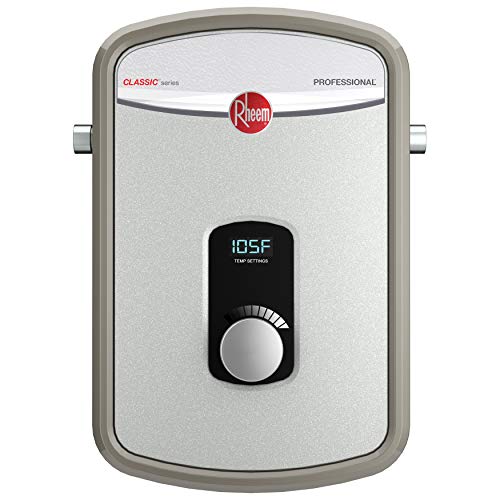
Features: ON/OFF dial control with adjustable digital temperature display; self-modulating power; flow up to 2.68 GPM.
Best for: Small apartments or single-outlet needs where compact, straightforward operation is preferred. Choose this if space and cost are primary considerations.
Caution: Lower flow may limit simultaneous uses; verify expected hot-water needs before installation.
Rheem 18kW 240V Tankless Electric Water Heater
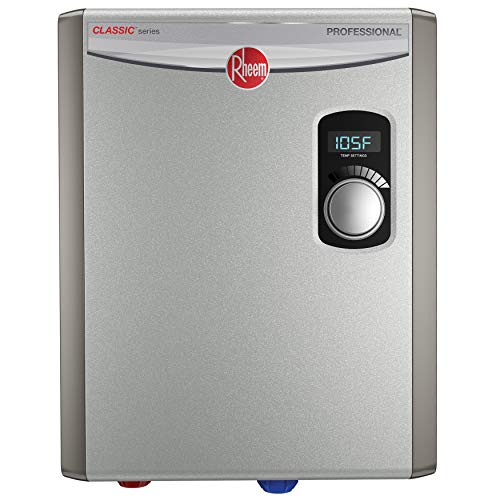
Features: External digital thermostatic control with LED display, advanced self-modulation to match hot-water demand, two copper heating elements, field serviceable; up to 4.4 GPM flow.
Best for: Homes with higher hot-water needs or multi-point usage where more power enables higher flow rates. Better for medium-to-large households.
Caution: Requires adequate electrical capacity (higher amperage) and proper installation clearances.
AIYEZIDT 110V 3000W Portable Electric Tankless Water Heater
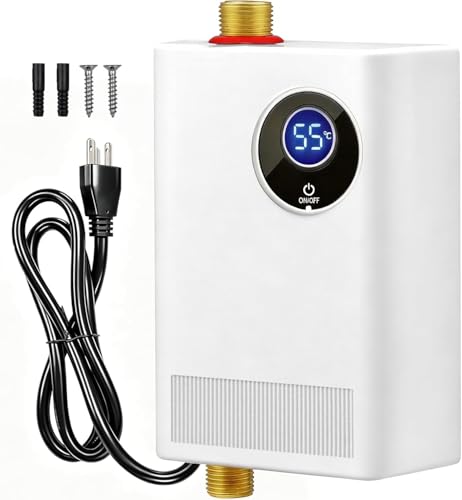
Features: 110V, 3000W with LCD display; compact wall-mounted design; IPX4 waterproof; multiple protections including dry-burning and leakage protection.
Best for: Point-of-use needs—kitchens, bathrooms, RVs, or apartments where space is limited and portable solutions are advantageous.
Caution: Not ideal for full-home showers or simultaneous multi-outlet use due to 110V limit and lower GPM.
Tankless Electric Water Heater 3000W 110V With Digital Display

Features: 3000W, 110V compatibility, LCD digital display, high-efficiency 98% thermal efficiency, IPX4 waterproof, compact for small spaces.
Best for: Small kitchens or bathrooms where a dedicated under-sink or point-of-use heater is needed. Choose this if you require rapid on-demand hot water at a single outlet.
Caution: Not suitable for showers or high-flow situations; verify outlet availability and panel capacity before install.
Rheem RTEX-24 24kW 240V Electric Tankless Water Heater
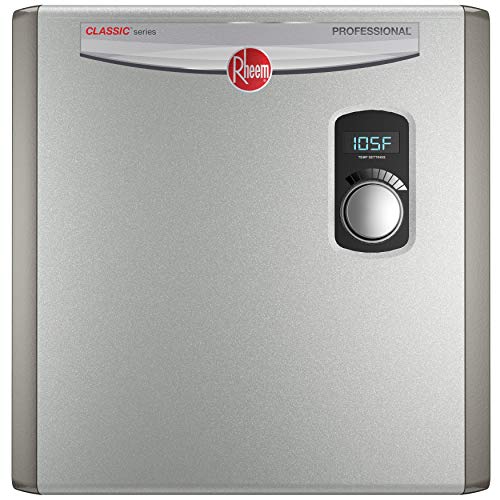
Features: 3 x 40 AMP breakers, 200-amp service recommended; 24kW at 240V; adjustable temperature with dial and digital display; performance depends on location.
Best for: Whole-home upgrades with robust electrical service. Better for households that require higher simultaneous hot-water supplies.
Caution: Requires substantial electrical capacity and space in the breaker panel; plan electrical work accordingly.
Buying Guide: Key Purchase Considerations
- Electrical supply: Check available amperage and service capacity. Higher-wkw units need dedicated breakers and possibly panel upgrades.
- Target use: Whole-home vs. point-of-use. Choose a model aligned with your hot-water demands and number of outlets.
- Flow rate vs. temperature rise: Consider GPM at your incoming water temperature to ensure your family’s needs are met.
- Installation space: If space is tight, prefer compact under-sink or wall-mounted units with clearances noted by the manufacturer.
- Safety features: Look for IPX4 waterproof ratings, dry-burn protections, and automatic power-off in inactive states for reliability.
- Controls and display: Digital thermostats help precise temperature management; self-modulating models save energy by adjusting power automatically.
- Compatibility: Ensure plumbing connections use standard NPT adapters and that heat-exchange materials are durable (copper elements preferred).
Frequently Asked Questions
- What size tankless water heater do I need for a whole home?
Assess peak simultaneous hot-water usage and average incoming water temperature. Higher flow needs higher-wattage units and ample electrical service.
- Can I install a tankless heater myself?
Electrical and venting considerations often require a licensed professional for safety and code compliance.
- Do tankless heaters save energy?
Yes, they only heat water on demand, reducing standby energy use compared to storage tanks, especially with self-modulating models.
- What maintenance is required?
Periodic descaling and inspection of connections help maintain performance, particularly in areas with hard water.
- Is 240V necessary for tankless electric heaters?
Many higher-flow models require 240V, while some point-of-use units operate on 110V. Check the product’s electrical requirements.