Answering the common question, “What bottled-water filtration system should I buy?” this guide highlights five practical, portable options that effectively remove bacteria, protozoa, microplastics, and particulates from freshwater sources. These systems are ideal for outdoor enthusiasts, travelers, campers, and anyone building an emergency kit. Each pick targets different use cases—from ultra-light backpacking to family-ready hydration. Below is a quick summary to help compare core strengths at a glance.
| Product | Best For | Key Benefit |
|---|---|---|
| Sawyer SP128 Mini | Ultra-compact trips | 2 oz, 0.1 micron inline filter |
| Sawyer SP129 Squeeze | Versatile, on-the-go | Includes 2 x 32-oz pouches |
| Waterdrop Gravity Straw | Group or longer hikes | 5-stage filtration, 1.5 gal bag |
| Bachgold Squeeze Foldable Bottle | Backcountry via backpacking | Dual-stage nanofiber and 0.2 µm membrane |
| LifeStraw Peak Series | Compact resilience | Collapsible 650 ml bottle filter |
Sawyer SP128 Mini Water Filtration System

The SP128 Mini uses a 0.1 micron absolute inline filter. It weighs about 2 ounces and fits in the palm of your hand, making it ideal for ultra-light backpacking, emergency kits, and travel where weight and space matter. The unit is tested to performance standards and can attach to a drinking pouch, standard 28 mm water bottles, hydration packs, or be used directly as a straw. Best for solo travelers and hikers who prioritize portability and speed.
Who it’s best for: solo hikers, minimalist travelers, and emergency-prep enthusiasts needing a compact, reliable filtration option. Why selected: its tiny footprint and universal compatibility support quick, on-source water purification. Caution: individual units are small and require direct water access for use; plan for quick filtration on the go.
Sawyer SP129 Squeeze Water Filtration System

The SP129 Squeeze includes two 32-ounce pouches, a straw, and a hydration pack adapter. It uses a 0.1 micron inline filter that removes bacteria, protozoa, cysts, sediment, and microplastics. It’s lightweight, easy to use, and well-suited for outdoor adventures, travel, or emergency preparedness. Best for: campers who want a flexible kit with ready-to-fill pouches and quick access to filtered water. Caution: the squeeze mechanism may require practice to optimize flow in highly turbid water.
Waterdrop Gravity Water Filter Straw

Feature-rich for group use or longer outings: a 5-stage filtration with a 0.1 µm ultrafiltration membrane, plus a 1.5-gallon gravity bag. It reduces chlorine, particulates, sediment, and odors, delivering better-tasting water. Best for: backcountry trips where you can fill a larger bag at a water source and let gravity do the work. Limitation: bulkier than single-cup filters, making it less ideal for ultralight travelers.
Bachgold Squeeze Foldable Bottle
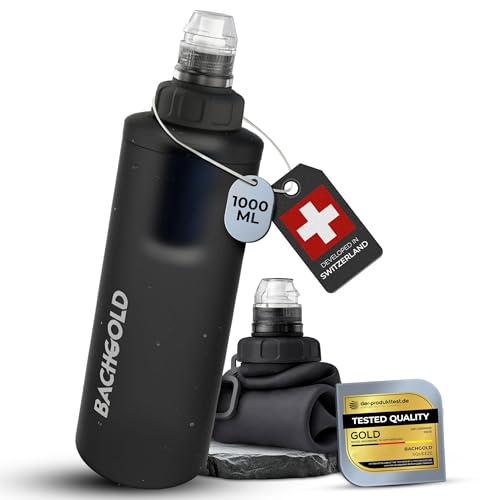
Dual-stage filtration combines an electro-adsorptive nanofiber layer with a 0.2-micron hollow fiber membrane. This Swiss-made design emphasizes portability and rapid squeeze-to-drink operation, folding flat for pocket or pack storage. Best for: backpackers who want a compact, no-fuss filtration system with strong back-to-back filtration. Caution: ensure the flexible pouch is fully filled to maximize flow and filtration efficiency.
LifeStraw Peak Series

The LifeStraw Peak Series offers a collapsible 650 ml bottle with a built-in filter that protects against bacteria, parasites, and microplastics. Its ultra-compact design suits travelers and hikers who need a ready-to-use bottle that folds away when empty. Best for: individuals who want a lightweight, self-contained filtration bottle. Caution: durability and replacement parts vary by kit; verify compatibility with your bottles and accessories before purchase.
Buying Guide: Key Purchase Considerations
- Filtration level and target contaminants: Most options remove bacteria, protozoa, and microplastics. Check micron ratings (0.1 µm is common) and whether the system covers particulates and chlorine odors.
- Weight, size, and packability: For ultralight travel, prioritise compact mini filters like the Sawyer SP128. For family or group use, gravity-fed systems offer higher capacity.
- Ease of use and maintenance: Consider whether a squeeze, gravity, or direct straw-style filter suits your routine. Look for ease of cleaning and the availability of replacement parts.
- Capacity and flow rate: Gravity bags and larger pouches increase water output per fill; squeeze systems optimize speed per pull. Choose based on daily water needs and source variability.
- Durability and environment: Alpine or desert environments demand filters that tolerate backwashing and rugged handling. Swiss engineering and tested components generally offer longer service life.
- Compatibility and accessories: Some systems work with standard water bottles, hydration packs, or specific pouches. Ensure compatibility with your existing gear.
Frequently Asked Questions
- What does 0.1 micron filtration mean?
It refers to the size of particles the filter can remove; smaller numbers indicate finer filtration, typically removing most bacteria and many protozoa. - Are these systems safe for international travel?
Yes, many are designed for travel and emergency use, but verify country-specific water safety needs and carry extra filters if needed. - Can I drink directly from a water source with these filters?
Some models support straw drinking directly from a source, while others require filling bottles or pouches first. - Do these filters remove microplastics?
Several models advertise microplastic removal; confirm the product’s stated filtration capabilities in the listed features. - How often should I replace the filter?
Replacement intervals depend on usage, water quality, and capacity; many units provide estimated lifespans or gallon-capacity guidelines. - Is backwashing necessary?
Some hollow-fiber designs benefit from backwashing to maintain flow; follow manufacturer instructions for best results.