Looking for a kid-friendly alarm clock that uses light to cue wake times and bedtime? This guide highlights five reliable toddler alarm clocks with color lights, gentle sounds, and intuitive interfaces. These clocks are best for parents seeking structured morning routines, calmer bedtimes, and gradual time-based cues for preschoolers and early elementary children. Each pick below includes who it’s best for, why it stands out, and a practical limitation to consider. A quick summary table follows to help you compare at a glance.
| Product | Best For |
|---|---|
| ANNNGUL Kids Alarm Clock | Toddlers who respond to green/yellow/red cues and simple setup |
| LittleHippo Mella | Kids who benefit from visual time cues and soothing sounds |
| DINVEL Kids Alarm Clock | Families needing multiple color/brightness options and customizable sounds |
| iHoo Ok to Wake Kids Alarm Clock | Children needing emoji cues and a built-in timer for naps |
| I·CODE Ok to Wake Alarm Clock | Young sleepers who respond to color, emoji signals, and backlight control |
ANNNGUL Kids Alarm Clock With Green/Red Light

The ANNNGUL clock uses a simple green light to signal “time to wake” and a red light for “stay in bed.” Its OK TO WAKE concept helps toddlers associate wake times with color cues, clarifying when it’s acceptable to rise. The device also offers a dimmable night light with ten color possibilities to suit daytime brightness and nighttime comfort. Setup is straightforward, with a design that minimizes confusing controls. Best for parents who want a clear, visual cue system and an easy-to-program clock for early wake-up discipline. A potential limitation is fewer advanced alarm options for older children who want richer customization.
LittleHippo Mella: Sleep Trainer Clock
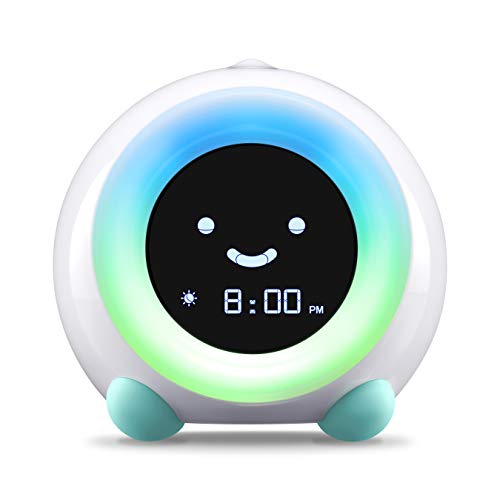
LittleHippo Mella combines color cues with facial expressions to guide kids from “bedtime” to “wake up.” It introduces yellow before wake time as a transition signal and green when it’s time to rise. The clock doubles as a night light and includes several soothing sounds, with a design that grows with the child. It’s best for families seeking a visually appealing, all-in-one sleep gadget that can adapt to a child’s changing needs. The limitation to note is that some users may prefer even more customizable alarm tones and brightness settings.
DINVEL Kids Alarm Clock

DINVEL’s clock emphasizes a visual wake cue with red and green signals, making the timing concept easy to grasp for toddlers. It offers full customization: 10 colors, 5 brightness levels, 5 soothing sounds, and 6 volume settings. This makes it a strong choice for families that want to tailor the sleep routine to a child’s sensitivities and age. A caveat is that the wide array of options may require a short setup period to dial in the most effective routine for your child.
iHoo Ok to Wake Kids Alarm Clock

iHoo’s clock uses color cues plus emoji indicators to teach time, with a dual alarm function and a nap timer. The wake up indicator shows green with a smile, while bedtime uses red with a sleepy emoji. It includes multiple sounds and adjustable volume to fit a child’s preferences. This model is best for families who appreciate emoji-assisted learning and a flexible timer for naps or quiet activities. A potential limitation is that some kids may respond more to visual signals than audio cues, so alignment with the child’s learning style is important.
I·CODE Ok to Wake Alarm Clock

I·CODE uses emojis and color cues to teach children when to wake and when to sleep, paired with a controllable night light and an auto-off timer. It’s suitable for younger kids who benefit from simple symbolism and a gentle light cycle. This option is best for families wanting a compact, straightforward sleep trainer that grows with the child’s needs. A limitation is that some users may desire more sound variety or deeper customization beyond the timer features.
Buying Guide: Key Purchase Considerations
What should you consider when choosing a toddler alarm clock light?
- Time cues: Do you need straightforward red/green indicators or richer color options and emojis? Pick a model whose signaling matches your child’s comprehension style.
- Sound options: Are soothing sounds or silent operation preferred? Consider whether you want multiple alarm tones and volume controls.
- Brightness and night light: How dim should the night light be, and how many color options are there? A dimmer with multiple colors supports bedtime comfort and daytime clarity.
- Ease of use: Do you want a clock with simple buttons or a device with a longer setup process? Some clocks prioritize intuitive layout; others offer depth via customization.
- Growth stage: Is the clock designed to stay relevant as your child ages? A few models offer features that adapt from toddler to older preschool years.
- Durability and power: Is it battery backup or AC-powered? A backup helps preserve settings during outages, while a sturdy build suits active toddlers.
Frequently Asked Questions
- What is an OK to WAKE clock?
It signals children when it’s time to stay in bed and when it’s appropriate to wake, typically using color lights and simple indicators.
- How do light colors help toddlers sleep?
Color cues provide visual signals that supplement words, helping children understand routines even if they cannot yet read.
- Can these clocks replace parental bedtime routines?
They are designed to support routines, not replace parental guidance. Consistent use reinforces sleep patterns.
- What should I look for in a nap timer?
Optional countdowns (e.g., 15–120 minutes) help structure naps and transitions for older toddlers and preschoolers.
- Are color-changing clocks suitable for all ages?
Many are designed for toddlers and young children, but some features may be more engaging for older kids; check age guidance in product descriptions.
- Is there a recommended number of colors or sounds?
Start with 2–4 colors and a few gentle sounds to minimize overstimulation; you can increase options as your child grows.