If you’re searching for a Moroccan cactus silk rug, the products below offer related cactus-inspired prints or Moroccan-style patterns, but their listings do not identify them as cactus silk. The aeevho rug is best for a colorful desert look, while the LIVEBOX and Lahome rugs suit shoppers who want Moroccan geometric motifs. Compare material and care details before choosing: the options here include faux cashmere, flannel, faux wool, and polypropylene.
| Product | Best For | Listed Material Or Style |
|---|---|---|
| aeevho Southwestern Desert Cactus Rug | Colorful cactus imagery | Faux cashmere; washable |
| LIVEBOX Moroccan Area Rug | Large geometric-patterned rooms | Moroccan-inspired; washable |
| Lahome Moroccan Rug | Soft, low-pile boho decor | Faux wool; washable |
| SAFAVIEH Moroccan Tassel Shag Rug | Plush, warm-toned interiors | Power-loomed polypropylene |
| GEDAEUBA Cactus Rug | Soft cactus-print floor coverage | Flannel; TPR backing |
aeevho Southwestern Desert Cactus Rug

Best for: Shoppers who want a prominent Southwestern cactus design in a large rectangular rug. The listed 7-by-10-foot size makes it a potential choice for a living room, bedroom, or farmhouse-style space where a broad printed pattern can anchor the decor.
The product is described as faux cashmere with a short pile. Its listing also calls out low shedding, resistance to tangling and wrinkling, and digitally printed color. A TPR backing is intended to help limit movement on the floor. For routine care, the seller suggests shaking off dust and hair, spot cleaning, vacuuming, or machine washing.
This is the closest match in the selection for a buyer whose search combines cactus imagery with a Southwestern or boho look. However, the listed material is faux cashmere, not cactus silk, and the motif is described as desert cactus rather than a traditional Moroccan silk-rug design.
Limitation: The listing notes that a small portion of products may have minor differences from the original design because of size proportions. Check the care instructions and dimensions for the exact option you choose.
LIVEBOX Moroccan Geometric Area Rug

Best for: Buyers who prioritize a large Moroccan-inspired diamond pattern over cactus imagery. The listed 8-by-10-foot size is intended for rooms such as living rooms, bedrooms, dining areas, offices, nurseries, and playrooms.
The rug uses a beige color scheme and a geometric design inspired by Berber motifs. Its listing describes it as washable and recommends shaking it outdoors or sweeping it for everyday upkeep. A handheld vacuum is also suggested for maintenance, and the product description says it can be machine washed in cold water without bleach.
Choose this option if the word “Moroccan” in your search means a tribal or Berber-style pattern and you need a large floor covering. The provided feature details focus on its diamond design, room versatility, and cleaning guidance rather than on cactus imagery or a cactus-derived fiber.
Limitation: The supplied product details do not specify a fiber composition, pile height, or backing material. Do not assume it is cactus silk; the listing does not make that claim.
Lahome Soft Moroccan-Style Rug

Best for: Shoppers looking for a soft-feeling, low-pile rug with a geometric tribal pattern. The listed 8-by-10-foot ivory option is designed for broad coverage in a living room, bedroom, dining room, office, or other home space.
Lahome describes the rug as faux wool with a soft feel and a short pile. Its Aztec-style geometric design is intended to bring vintage character to boho and Western-inspired interiors. For regular care, the listing suggests shaking or patting the rug. It also says machine washing is possible on a gentle cycle with low-temperature drying.
Choose this rug if a neutral color, low pile, and easy-care instructions matter more than cactus motifs. It offers a Moroccan-adjacent geometric look, but its listed construction is faux wool rather than cactus silk. The product details do not describe it as a traditional handmade Moroccan rug.
Limitation: The listing notes that an 8-by-10-foot rug may require a commercial washing machine. Consider your available cleaning equipment before selecting this size.
SAFAVIEH Moroccan Tassel Shag Rug
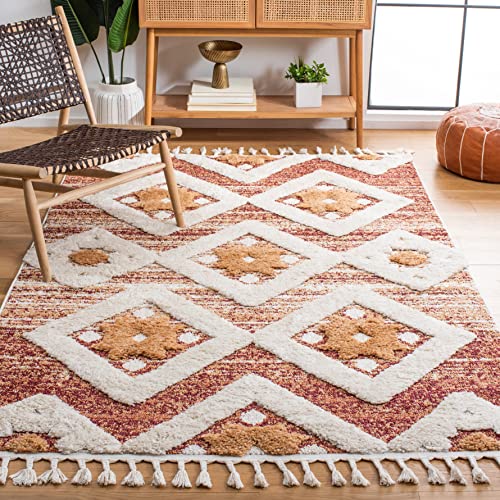
Best for: Buyers who want a plush, warm-toned Moroccan-inspired rug for a living room, bedroom, or home office. The listed size is 5 feet 3 inches by 7 feet 6 inches, with rust and ivory colors and a two-inch pile.
This rug is power-loomed in Turkey from polypropylene. Its rust-colored field and ivory motifs provide a medium-contrast pattern, while the high pile is described as comfortable for bare feet. The product information says polypropylene releases dirt to vacuum and sheds little or not at all. It also recommends rotating the rug twice a year to distribute sun and foot-traffic wear.
Choose this option if pile height and a richer, warmer color palette are priorities. It is a better fit for someone seeking a plush Moroccan-inspired accent than for someone specifically seeking a cactus print or cactus silk construction.
Limitation: A two-inch pile can be less suitable for buyers who specifically need a low-profile rug. The listed material is polypropylene, not cactus silk.
GEDAEUBA Soft Cactus Area Rug

Best for: Shoppers who want a cactus-themed printed rug with a soft surface and non-slip backing. The product title identifies a 6-by-9-foot size and positions the design for living rooms and bedrooms.
The listing describes a flannel surface that feels soft and warm underfoot. It also identifies a TPR rubber backing intended to help the rug stay in place and reduce bunching during everyday use. A digitally printed cactus and sun design provides the room’s main visual feature.
This rug is a practical comparison choice when cactus imagery is more important than a traditional Moroccan motif. Its printed design can work with eclectic or mid-century decor, but the supplied features do not describe a Moroccan weaving technique, handmade construction, or cactus-derived fiber.
Limitation: The product title and features emphasize a cactus-and-sun print, not a Moroccan rug pattern. Its flannel material also means it should not be mistaken for cactus silk.
Buying Guide: How To Choose A Moroccan Cactus Silk Rug
The products above are related alternatives, not confirmed cactus silk rugs. Their listings describe synthetic or other non-silk materials, printed cactus designs, or Moroccan-inspired geometric patterns. If authentic cactus silk is essential, verify the fiber, manufacturing method, and origin directly from the seller before purchasing.
Do you want cactus imagery or a Moroccan pattern?
These are different design priorities. The aeevho, GEDAEUBA, and Phtbz products emphasize cactus or desert imagery. The LIVEBOX, Lahome, and SAFAVIEH options focus more on geometric, tribal, or Moroccan-inspired styling. Decide whether the plant motif or the traditional pattern should lead the room’s design.
For a cactus-forward space, compare the colors and print style with existing furniture. For a Moroccan-inspired room, look for geometric motifs, contrast, and a palette that complements the rest of the decor. A rug that combines both themes may be harder to find among listings that clearly identify their materials and designs.
What does “cactus silk” mean on a rug listing?
A product title or image alone does not confirm cactus silk. Check the material description for an explicit fiber claim, and look for details about how the rug is made. In this selection, the listed materials include faux cashmere, flannel, faux wool, and polypropylene. None of the supplied descriptions identify a rug as cactus silk.
When material authenticity matters, ask the seller for clarification about the fiber and construction. Avoid relying on broad terms such as “Moroccan style,” “cactus rug,” or “boho” as proof of a particular material. Those phrases can refer to appearance rather than fiber content or origin.
Which size and pile height fit your room?
Measure the area before choosing a size. A larger rug can define a seating group or cover more of a bedroom floor, while a smaller one can act as an accent. Among the options here, listed dimensions range from a medium-sized 5-by-8-foot rug to large 8-by-10-foot styles. The aeevho option is listed as 7 by 10 feet, and the GEDAEUBA option is listed as 6 by 9 feet.
Pile height affects the look and feel underfoot. SAFAVIEH lists a two-inch high pile, while Lahome identifies a short pile and the aeevho product describes a short-pile surface. Choose a higher pile if plushness is the priority, or a low pile if you prefer a flatter profile. Confirm the exact dimensions and pile details for the selected variation.
How important are washing and everyday maintenance?
Care instructions vary. LIVEBOX says its rug can be machine washed in cold water without bleach. Lahome suggests a gentle washing cycle and low-temperature drying, but notes that its 8-by-10-foot size may require a commercial machine. The aeevho listing also describes machine washing as an option, while SAFAVIEH recommends vacuuming and rotating the rug.
Always follow the instructions for the exact product and size. A rug described as washable may still be difficult to fit in a home washer. For busy households, check whether the listed care method is realistic for your equipment and room use.
Should you prioritize a non-slip backing?
GEDAEUBA and aeevho describe TPR backing intended to reduce movement. A non-slip backing can be a useful feature on smooth floors, especially in rooms where people walk or children play. The provided feature details for the LIVEBOX and SAFAVIEH rugs do not specify the same backing, so check their listing information if grip is a deciding factor.
Even when a rug has a non-slip backing, placement and floor conditions can affect how securely it stays put. Follow the product’s care and placement guidance, and check the backing periodically for dust or debris that could affect its grip.
How should you compare color and pattern?
Printed designs and woven geometric patterns create different effects. Cactus and desert prints can become a room’s focal point, while beige, ivory, rust, or tribal-inspired motifs may be easier to coordinate with patterned furnishings. SAFAVIEH notes that its rust tones may look somewhat different across screens and daylight, so allow for possible color variation when comparing product images.
For a calmer room, consider a restrained palette and a simple geometric pattern. For a more expressive space, compare the scale and color intensity of cactus prints with nearby textiles, wall art, and furniture.
Frequently Asked Questions
Are any of these products confirmed to be cactus silk rugs?
No. The supplied product details identify other materials, including faux cashmere, flannel, faux wool, and polypropylene. They do not confirm cactus silk construction.
Which option is best for a cactus print?
The aeevho rug is the strongest match for a Southwestern desert cactus design. GEDAEUBA also offers a cactus-themed print with a soft flannel surface and TPR backing.
Which option is best for a Moroccan geometric look?
LIVEBOX is a clear choice for a Berber-inspired diamond pattern. Lahome offers an ivory geometric tribal design, while SAFAVIEH pairs Moroccan-inspired motifs with a rust-and-ivory palette.
Which rugs in this selection are described as washable?
LIVEBOX, Lahome, and aeevho include washing guidance in their supplied product details. Check the care instructions for the exact size before washing, especially for large rugs.
What should I verify before buying a rug described as cactus silk?
Verify the fiber content, construction method, and origin with the seller. Do not treat a cactus image or Moroccan-inspired design as evidence that a rug is made from cactus silk.